Showing posts with label Hazardous Tree Removal. Show all posts

Saturday, April 27, 2013

What Happens to Recycled Items?


631-993-1039 / 516-659-4716


In many places and counties now its required for people to recycle or other ways they'll be exposed to fines. But many people doesn't even know what happens to recycled items. It is hard to truly understand the impact you are making by decreasing your waste sent to the landfill.

What Happens to Aluminium? 

Can usually get compacted int bale, bales get shredded into smalls pieces ad then they get melted inot raw aluminum materials. The melted aluminum is then molded into new aluminum materials, including new aluminum cans and aluminum foil.

What Happens to Glass?

Recycled companies Crush the glass making it small pieces called cullet, it looks like sand. Cullet can be used in different applications but it can also be melted.  The melted glass is dropped into a glass forming machine where it is poured into molds, blown with air and shaped into its final shape such as a soda bottle.

What Happens to Paper?
After being picked up, paper must first be separated by its type.  it is "squashed into large cubes, called bales," and transported to a processing plant. There, it's chopped and put through several mechanical and chemical treatments which wash out ink and contaminants, leaving a watery "slurry." The slurry is then made into new paper products.

What Happens to Plastic?
Plastic is separated by its resin type, which is printed on the bottom of each item inside a triangle. It's also separated by shape: plastic bags, for example, are not processed with milk jugs. After separating, plastics are compressed into bales and transported to a processing plant, then washed and shredded into tiny pieces. They can then be melted and molded into new products.


Contact Us,  Like US, Follow Us or you can also Watch Our Videos.

Wonderful Facts about Trees


631-993-1039 / 516-659-4716
www.AAATreeServiceNY.com


·       Trees are the longest living organisms on the planet and one of the earth's greatest natural resources. They keep our air supply clean, reduce noise pollution, improve water quality, help prevent erosion, provide food and building materials, create shade, and help make our landscapes look beautiful.

·       Well-maintained trees and shrubs can increase property value by up to 14%.

·       Trees properly placed around buildings can reduce air conditioning needs by 30%

·       A mature tree removes almost 70 times more pollution than a newly planted tree.

·       A healthy tree can have a value of up to $10,000.

·       The shade and wind buffering provided by trees reduces annual heating and cooling costs by 2.1 billion dollars.

·       Each average-sized tree provides an estimated $7 savings in annual environmental benefits, including energy conservation and reduced pollution.

·       A single tree produces approximately 260 pounds of oxygen per year. That means two mature trees can supply enough oxygen annually to support a family of four!

·       Water originating in our national forests provide drinking water for over 3400 communities, and approximately 60 million individuals.

·       One tree can absorb as much carbon in a year as a car produces while driving 26,000 miles.

·       Over the course its life, a single tree can absorb one ton of carbon dioxide.

·       An average American uses about 750 pounds of paper every year, and 95% of homes are built using wood. That means each person uses the equivalent of one 100 foot tall, 16 inch diameter, tree every year for their paper and wood product needs.

·       About one third of the United States of America is covered by forests.

·       According to the last forest inventory, there are almost 247 billion trees over 1 inch in diameter in the U.S.

·       The average tree in an urban/city area has a life expectancy of only 8 years.

·       The tallest tree in the country is a Coast Redwood growing in northern California's Redwood National Park. It is 369 feet tall and over 2000 years old!

Contact Us,  Like US, Follow Us or you can also Watch Our Videos.


Sources:
saveatree.com
NYC Parks Department "Tree Census," 2005-2006 (www.nycgovparks.org/trees/tree-census/2005-2006/benefits)

Ohio State University "Environmental Benefits Analysis of Trees for the Governor's Residence and Heritage Gardens," 2010

(treesmatter.osu.edu/_documents/_pdfs/governorsresidence051910.pdf)

U.S. Department of Agriculture (USDA)

(www.usda.gov/wps/portal/usda/usdahome) a. "Buffer Solution for Pork Production," 2002
(nrcspad.sc.egov.usda.gov/distributioncenter/pdf.aspx?productid=150&buffersolu4porkpro)
b. "Forest Ecosystem Study Unit for the Georgia Envirothon," 2006
(www.fs.usda.gov/internet/fse_documents/fsm9_028556.pdf)
c. "Carbon Storage and Accumulation in United States Forest Ecosystems," 1992
(www.nrs.fs.fed.us/pubs/gtr/gtr_wo059.pdf)
d. "Methods for Calculating Forest Ecosystem and Harvested Carbon with Standard Estimates for Forest Types of the United States," 2006
(nrs.fs.fed.us/pubs/gtr/ne_gtr343.pdf)

U.S. Forest Service

(www.fs.fed.us)

Management Information Services

(www.misi-net.com)

Arbor National Mortgage

(www.arbor.com)

American Forests

(www.americanforests.org)
a. "Calculations on CO2 Absorption"
(www.americanforests.org/assumptions-and-sources/)
Council of Tree and Landscape Appraisers (The Council of Tree & Landscape Appraisers (CTLA) is an organization of tree care and landscape associations, including TCIA, the American Nursery and Landscape Association (ANLA), American Society of Consulting Arborists (ASCA), American Society of Landscape Architects (ASLA), PLANET, and International Society of Arboriculture (ISA). These organizations work together to compile and produce the CTLA Guide to tree and plant appraisals.)

Saturday, January 12, 2013

Fertilizing


631-993-1039 / 516-659-4716
Trees growing in their natural habitat should have access to all of the minerals they need to survive and grow.  Anything you can do to mimic that habitat can reduce the need for fertilizer.  This may include letting leaves remain on the ground in the fall instead of raking them up.  Chances are, though, that despite your best efforts, the need for fertilizer will not be entirely eliminated.

Most trees experience a single flush of growth during spring followed by slower growth throughout the summer and fall. Because of this single flush of growth, it is desirable to have nutrients available to the tree as this growth is about to occur. The most beneficial time to apply fertilizer is from when the ground is workable in the spring until just before trees start growing in early May. On sandy soils, applications should be split, half in early spring and half in mid- to late May.

During the growing season, fertilizing can help a tree overcome mineral deficiencies and fight off infections.  If you are fertilizing in mid- to late summer, avoid formulations high in nitrogen as this will just promote weak, new growth that may be easily damaged in the winter.

Do you have any questions of your own CONTACT US: here or on Facebook or Twitter 

Sunday, January 6, 2013

Have You Ever Wonder How They Name Hurricanes and Storms?

631-993-1039 / 516-659-4716


The actual system isnt complicated everything is based on latitude and longitude of a storm which is how the meteorologists track them, but they needed a system to recognize them.  

Back in 1953, the National Weather Service needed to tell the public which storm and the way of such so they picked up the tradition of the naval meteorologist of naming the storms after women just like they used to with ships but in 1979 male names were included.
Usually storm names get recycle but due to the impact some make and all the disaster they cause  hey think is not appropriate to repeat certain names so they take those particular names off the list.  
2013 Storm names are :
Andrea, Barry, Chantal, Dorian, Erin, Fernand, Gabrielle, Humberto, Ingrid, Jerry, Karen, Lorenzo, Melissa, Nestor, Olga, Pablo, Rebekah, Sebastien, Tanya, Van & Wendy


For more information about AAATREESERVICE visit us at www.aaatreeserviceny.com

How To Prepare Your Trees For Winter


631-993-1039 / 516-659-4716


Are Many people asked them selves how to get ready for winter and although its a fact that trees native from the area are the ones who will make it the best because they are ready to handle all seasons others make not make it out the same.


Tree Wrap
Smooth-barked trees are susceptible to something called “frost cracks”. These occur when there is a sudden change in temperature and can hurt the tree.

Pruning
If you prune and take care of your tree this will allow the tree to not be able to get heavy with the snow so the high risk of falling on your home diminishes.

Mulch
Mulch can protect trees n many ways including wildfires. It also helps so small animals don't make their homes destroying the trees.

Watering
Some Trees make have troubles getting hydrated due to the snow blockage which makes the tree dry and results on it dying. 

Fertilizing
Fertilizing with nitrogen-heavy products in the fall is the key element for a tree growth and resistance. 

Inspection
This one is easy but if you don't know much get in contact with you local Tree Expert. By hiring an expert they will tell you what's the best thing to do to take care of your tree.  


Saturday, January 5, 2013

How To Spot A Dead Tree

631-993-1039 / 516-659-4716


Many times it doesn't necessarily needs to be an specific season when you can spot a dead tree or dead wood. While its true that these can be tough calls at first view, there are many ways you can still recognize when a tree is dead or alive even in the winter time.

at first glance the easiest ways to see its if some parts of the tree are green while others are brown. You may try to pull a little piece and if it gives you some resistance it means its alive while the dead tree will flake off easily. Make sure you check if there are any bumps along the stump, these may be the beginning of new branches being formed which would mean that your tree is pretty much alive still. 

You may want to use and small knife and cut an small portion and look for green. The collar of a tree will always be slightly raised and swollen. 

You can always contact you local Tree expert.  

Do you have any questions of your own CONTACT US: here or on Facebook or Twitter 

Saturday, December 8, 2012

CAT RESCUE


631-993-1039 / 516-659-4716


Cats seem to be fans of climbing trees, there are many reasons why they do but mostly to do with predatory or defensive instincts. Cats, as predators like to know its surroundings. Their scope of vision is considerably smaller than the outdoor environment of their yards or neighborhoods.

Cats often climb trees to get a better view of their surroundings, to help them see any potential dangers or potential prey. While cats are predators, they are also vulnerable to attacks from larger animals, such as dogs or even other cats.

A tree often provides a safe hiding place, particularly from any annoyed canine that happens to be passing. In the wild, cats climb up trees to give them a resting or napping place that is out of predators’ range. It also helps disguise their presence, which can prevent any prey from noticing that there is a cat in the vicinity. Sometimes, cats climb trees in response to noticing the inhabitants of upper branches: birds and squirrels.

Frequently, a cat will be a little too excited by the possibility of a free-range meal and climb to precarious heights in pursuit of a tasty meal. This situation can result in serious unhappiness for the other animal, the cat, and the owner faced with getting his or her pet down from the top branches of a spruce, so a cat owner may want to consider taking preventative action the moment his or her cat approaches a likely tree.


Saturday, October 27, 2012

SOME OF THE LATEST JOBS ON YOUR AREA


631-993-1039 / 516-659-4716


Syosset, NY 


Melville, NY 


Dix Hills, NY  


Hewlett, NY 


Make Sure to Like Us on Fb and follow us Twitter for more.

You can always Visit us on our Website!


AUTUMN CLEAN UP


631-993-1039 / 516-659-4716


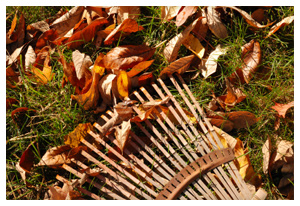
When seasons change we all love the change and mix of colors, but this beauty can only last for a bit when we realize these leaves will fall and we will have to clean up. They can be cleaned through blowing, raking or vacuuming.


When cleaning and putting all the leaves together we recommend concentrated areas suck as under trees, inside fences or the crook of an l-wing on a house, where the leaves stay there and don't have another place to go.

Try to just not blow them , you can add carbon dioxide which reduces other nutrients to the environment.


Leaves can damage for homes, cars but specially roofs. 

To prevent this you should trim your branches so that leaves don't fall on your roof, the perfect time for pruning is before leaves start falling which eliminates the work in advance.

To lighten cleaning loads for the leaves that do land on the roof, consider covering gutters with chicken wire or commercial gutter screens. 

5 ways to get rid of leaves after collected would be compost them, make leaf mold, mulch, hoard them or mow them.

To tell us more about your fall cleaning experience you can follow us on Twitter or like us on Facebook